About Standard Cement Grouting Pumps
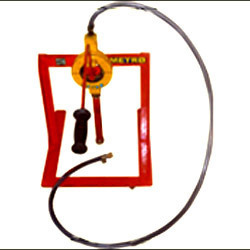
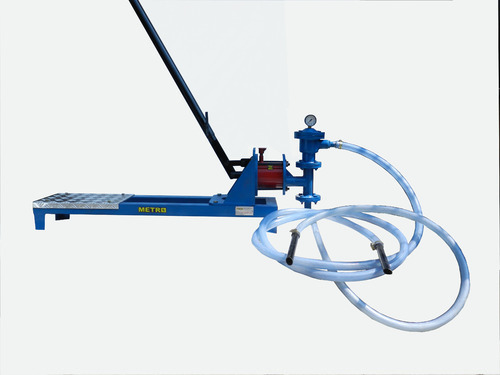
The Standard Cement Grouting Pumps is hand operated diaphragm pump, which is widely used for grouting small and medium cable ducts. With the movement of the diaphragm, the suction of fine cement grout is performed, wherein pressure is retained by two ball lock valves that are provided at inlet and outlet. The pump can develop pressure up to 4kg/cm2 (60 P S I) and discharges approximately 190 liters of neat cement grout per hour.
Features of Manual Cement Grouting Pumps:- Especially designed in hexagon brass non-return valve and strainer at the suction end to ensure non choking of the system.
- Easy to remove and clean.
- Maintenance free.
- Highly economical.
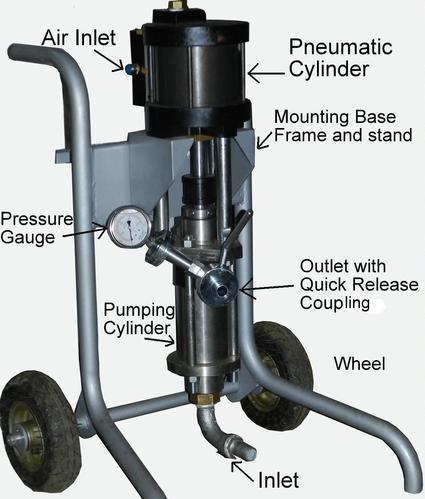
Engineered for Performance and DurabilityThese cement grouting pumps feature high-pressure piston seals, positive suction, and strong construction with mild steel or cast iron. With the ability to work continuously, they are designed to withstand challenging environments and offer long service life. The powder-coated finish adds a layer of corrosion resistance, making them suitable for frequent use in demanding applications like soil stabilization and waterproofing.
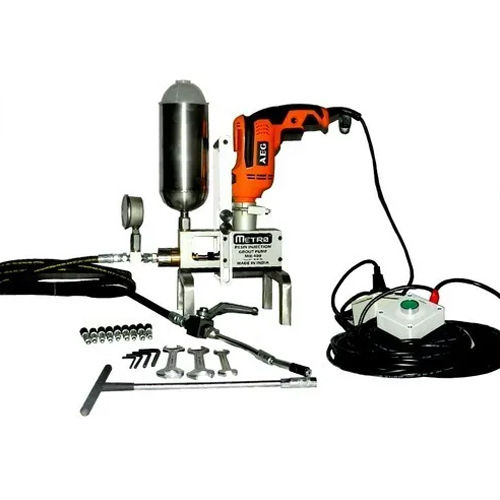
Versatile Applications and Reliable OperationWhether you are a contractor or an engineer, these pumps are well-suited for cement grouting, pressure grouting, and waterproofing needs. Their reciprocating piston pump theory guarantees consistent flow and high discharge pressure, while manual priming and V-belt or direct drive options provide flexibility. With support for both portable and base-mounted installation, they integrate easily into various onsite workflows.
FAQs of Standard Cement Grouting Pumps:
Q: How do I operate a Standard Cement Grouting Pump for optimal performance?
A: To operate the pump efficiently, ensure correct manual priming and a secure power connection (230V/415V). Choose the appropriate drive typeV-belt or directand follow the manufacturers instructions for manual start/stop. Regularly check lubrication via the grease cup to maintain smooth operation, especially during continuous use.
Q: What preventive maintenance is required for this cement grouting pump?
A: Routine maintenance involves checking and replenishing lubrication using the grease cup, inspecting high-pressure piston seals, and verifying that suction and discharge hoses remain unobstructed. Keeping the powder-coated exterior clean will support corrosion resistance and durability. Always observe the noise level and investigate if it exceeds 75 dB, which may indicate a servicing need.
Q: When should I choose a single-cylinder versus a double-cylinder model?
A: A single-cylinder model suits light to medium grouting applications requiring lower flow rates, while a double-cylinder option is ideal for continuous operation and higher volume tasks, as it offers smoother output and greater pumping capacity up to 300 LPH.
Q: Where can these pumps be used effectively?
A: They are widely used on construction sites across India for cement grouting, soil stabilization, pressure grouting, and waterproofing projects. Their portable, skid-mounted design enables deployment in confined or remote locations, and IP54 protection ensures safe use in challenging site conditions.
Q: What is the process for priming the pump before use?
A: Manual priming is required before starting. Fill the pump chamber with water or the grouting mixture via the priming port to remove air. Ensure all connections are tightly sealed to prevent loss of suction, enabling immediate and efficient pumping.
Q: How does continuous operation benefit construction projects?
A: Continuous operation capability enhances productivity by reducing downtime between grouting tasks. This feature ensures uniform application, crucial for soil stabilization and waterproofing projects, thereby improving overall project efficiency and results.
Q: What are the benefits of choosing a pump with a powder-coated finish and IP54 protection?
A: The powder-coated finish increases resistance to corrosion and wear, while the IP54 protection safeguards against ingress of water and dust. Together, these features prolong pump life and reduce maintenance requirements, making them a reliable choice for harsh construction environments.

 Send Inquiry



 Send Inquiry

 Send Inquiry


