About Hydrostatic Pressure Test Pumps
The delivered Hydrostatic Pressure Test Pumps are basic system used to check liquid weight vessel, for example, components, castings, valves, tubes pipe, boiler, cylinders, etc. They are likewise a typical testing strategy to check vessels do not have fabrication flaws or any spill in the structure. In addition, these are significant for vessels in light of a legitimate concern for instrument protection and toughness under working pressures. Moreover, the vessel to be checked is situated inside a fixed vessel that is loaded up with an incompressible liquid, commonly oil or water. The test vessel of our Hydrostatic Pressure Test Pumps is then exposed to an acknowledged interior pressure for a defined duration.
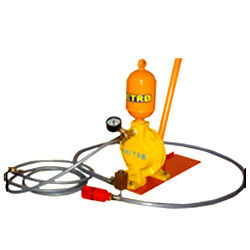
Engineered for Precision TestingThe HDTP-50 Hydrostatic Pressure Test Pump is meticulously crafted with a durable 2 mm mild steel body. With a capacity of 25 LPH and a substantial 6-liter water tank, it efficiently meets the demands of rigorous pipeline and industrial vessel testing. Designed to test plumbing systems and industrial apparatus, this pump stands as a trustworthy tool for quality assurance.
Versatility in ApplicationSuitable for a broad spectrum of testing scenarios, the HDTP-50 excels in both plumbing pipeline assessments and extensive industrial vessel verification. Its piston mechanism and sizeable plunger ensure consistent pressure buildup, making it indispensable for professionals who require adaptability in their test equipment.
Benefits for ProfessionalsProfessionals benefit from the HDTP-50's sturdiness, ergonomic structure, and straightforward operation. The 3 m head size and manageable water capacity allow for precise pressure control, enhancing safety and efficiency during both preliminary and comprehensive tests. Supported by a vast distribution network in India, the pump is accessible nationwide.
FAQ's of Hydrostatic Pressure Test Pumps:
Q: How is the HDTP-50 hydrostatic pressure test pump used safely in plumbing and industrial vessel applications?
A: To ensure safe operation, connect the HDTP-50 pump securely to the pipeline or vessel being tested, fill the 6-liter water tank, and use the piston mechanism to build pressure up to the test requirement. Always follow operational guidelines and wear appropriate safety gear during testing.
Q: What are the main benefits of using a piston-structured HDTP-50 pressure test pump?
A: The piston structure ensures a stable and consistent pressure output. This design allows for precise monitoring and control, making the pump suitable for high-stakes plumbing and industrial vessel testing where accuracy and reliability are crucial.
Q: When should I choose the HDTP-50 over other hydrostatic pumps?
A: Choose the HDTP-50 when you need a robust, portable, and efficient pump for medium-scale pipeline or industrial vessel testing, especially where a 25 LPH capacity and a 3-meter head are suitable. It's ideal for both onsite plumbing checks and factory testing protocols.
Q: Where can I purchase or source the HDTP-50 test pump in India?
A: The HDTP-50 is widely available through authorized distributors, exporters, suppliers, manufacturers, and traders across India. Contacting local industrial supply companies or the manufacturer directly will help you locate a reliable source.
Q: What is the process for setting up the HDTP-50 before testing?
A: Begin by filling the 6-liter tank with clean water. Attach the pump outlet to the equipment you are testing. Ensure all connections are secure, then operate the handle to pressurize the system. Monitor the pressure gauge to reach the desired test pressure.
Q: How does the material and build quality of the HDTP-50 enhance its performance?
A: Constructed from 2 mm thick mild steel, the HDTP-50 offers strong resistance to corrosion and mechanical stress. This robust construction ensures long-term performance and reliability even in demanding industrial environments.
Q: What specific usage scenarios is the HDTP-50 designed for?
A: The HDTP-50 is specifically crafted for hydrostatic pressure testing in plumbing lines and industrial vessels. Its construction and capacity make it suitable for both initial installation checks and routine maintenance of pressurized systems.

 Send Inquiry




 Send Inquiry

 Send Inquiry


